
product
-

-
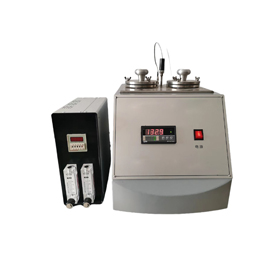
KN-5800Z Automatic Lubricating Oil Evaporation Loss Tester (NOACK Test)
The evaporation loss is of particular importance in engine lubrication. Where high temperatures occur, portions of an oil can evaporate.
Evaporation may contribute to oil consumption in an engine and can lead to a change in the properties of an oil. Many engine manufacturers specify a maximum allowable
evaporation loss. Some engine manufacturers, when specifying a maximum
allowable evaporation loss, quote this test method along with the specifications.Read
more >
-
-
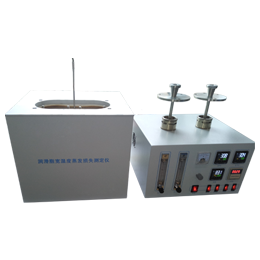
KN-972 Evaporation Loss for Lubricating Grease
The loss of volatile materials from greases and oils can adversely effect the original performance characteristics of a lubricant and therefore could be a significant factor in evaluating a lubricant for a specific use. Such volatiles can also be considered contaminants in the environment in which the lubricant is to be used. Correlation between results from this test method and service performance has not been established.Read
more >
-
-
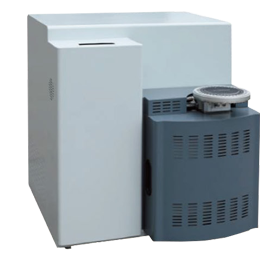
KN-2595 Lubricating Grease Wide Temperature Range Evaporation Loss Tester
KN-2595 Lubricating Grease Wide Temperature Range Evaporation Loss Tester conforms to ASTM D2595 Standard Test Method for Evaporation Loss of Lubricating Greases Over Wide-Temperature Range. A weighed sample of grease in an evaporation cell is placed in a heating device maintained at the desired test temperature. Heated air is passed over the grease surface for 22h±0.1h. The loss in weight of the sample due to evaporation is determined.Read
more >
-
-
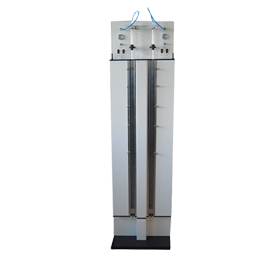
KN-5373 Carbon, Hydrogen and Nitrogen Elements Analyzer
KN-5373 Carbon, Hydrogen and Nitrogen Elements Analyzer conforms to ASTM D5291 Standard Test Methods for Instrumental Determination of Carbon, Hydrogen, and Nitrogen in Petroleum Products and Lubricants and ASTM D5373 Standard Test Methods for Determination of Carbon, Hydrogen and Nitrogen in Analysis Samples of Coal and Carbon in Analysis Samples of Coal and Coke.This test method A covers the determination of carbon in the range of 54.9% to 84.7%, hydrogen in the range of 3.26% to 5.08%, and niRead
more >
-
-
KN-1319 Fluorescent Indicator Absorption Apparatus
The determination of the total volume % of saturates, olefins, and aromatics in petroleum fractions is important in characterizing the quality of petroleum fractions as gasoline blending components and as feeds to catalytic reforming processes.Read
more >
-
-
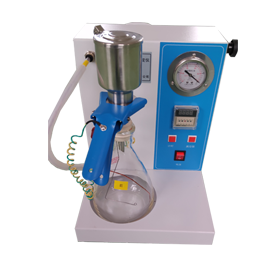
KN-2276 Solid Particulate Pollutant Tester for Jet Fuel
This tester provides a gravimetric measurement of the particulate matter present in a sample of aviation turbine fuel by line sampling. The objective is to minimize these contaminants to avoid filter plugging and other operational problems. Although tolerable levels of particulate contaminants
have not yet been established for all points in fuel distribution systems, the total contaminant measurement is normally of most interestRead
more >
-
-
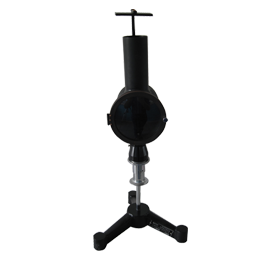
KN-1322 Smoke Point Apparatus for Kerosene
The smoke point is related to the hydrocarbon type composition of such fuels. Generally the more aromatic the fuel the smokier the flame. A high smoke point indicates a fuel of low smoke producing tendency.Read
more >
-
-
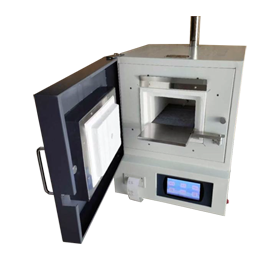
KN-3175 Apparatus for Volatile Matter of Coal and Coke
KN-3175 Apparatus for Volatile Matter of Coal and Coke conforms to the ASTM D3175 Standard Test Method for Volatile Matter in the Analysis Sample of Coal and Coke. Volatile matter, when determined as herein described, can be used to establish the rank of coals, to indicate coke yield on carbonization process, to provide the basis for purchasing and selling, or to establish burning characteristics.Read
more >
-
-
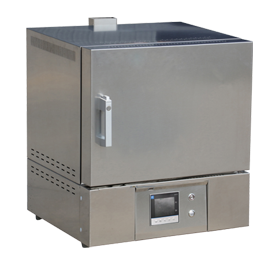
KN-482 Ash Content for Petroleum Product
Knowledge of the amount of ash-forming material present in a product can provide information as to whether or not the product is suitable for use in a given application. Ash can result from oil or water-soluble metallic compounds or from extraneous solids such as dirt and rustRead
more >
-
-
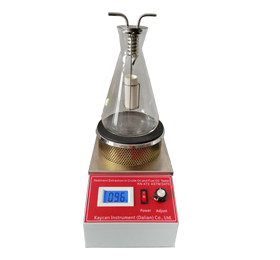
KN-473 Sediment Extraction in Crude Oil and Fuel Oil
A knowledge of the sediment content of crude oils and fuel oils is important both to the operation of refining and the buying or selling of these commoditiesRead
more >


 Method
 Flash point

 No.88 Xin Shuini Road, Ganjingzi District, Dalian, Liaoning Province
 Mobile:+86-13889520862 Email:jimmychou@kaycantest.com; info@kaycantest.com