Oil type

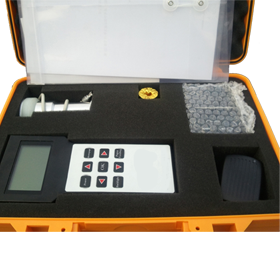
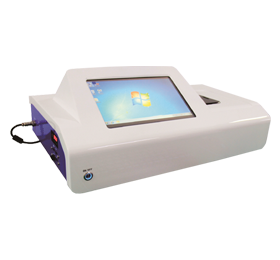
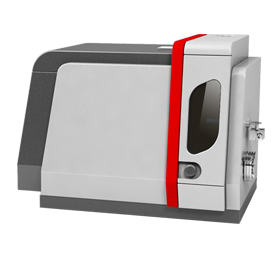
KN-OC Portable Octane and Cetane Tester

Determines the Pump Octane Number (AKI), Research Octane Number (RON), and Motor Octane Number (MON) of unleaded gasoline, ethanol blended gasoline, leaded gasoline and Cetane Number for diesel fuels.
Read more >

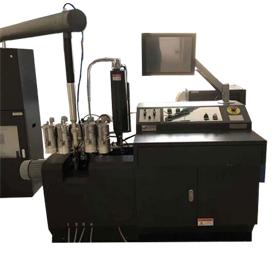
KN-300R Octane Number of Spark-Ignition Engine Fuel

Research O.N. correlates with commercial automotive spark-ignition engine antiknock performance under mild conditions of operation. Research O.N. is used by engine manufacturers, petroleum refiners and marketers, and in commerce as a primary specification measurement related to the matching of fuels and engines. Empirical correlations that permit calculation of automotive antiknock performance are based on the general equation:
Read more >

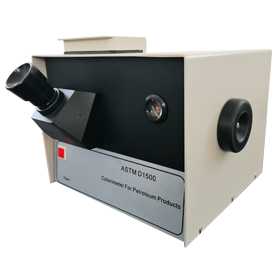
KN-1500 Colorimeter for Petroleum Products

Determination of the color of petroleum products is used mainly for manufacturing control purposes and is an important quality characteristic, since color is readily observed by the user of the product. In some cases, the color may serve as an indication of the degree of refinement of the material. When the color range of a particular product is known, a variation outside the established range may indicate possible contamination with another product. However, color is not always a reliable guide
Read more >

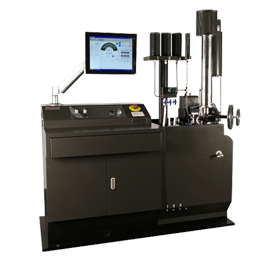
KN-600T Cetane Number of Diesel Fuel Oil

KN-600T Cetane Number of Diesel Fuel Oil conforms to ASTM D613 Standard Test Method for Cetane Number of Diesel Fuel Oil. The cetane number of a diesel fuel oil is determined by comparing its combustion characteristics in a test engine with those for blends of reference fuels of known cetane number under standard operating conditions. This is accomplished using the bracketing handwheel procedure which varies the compression ratio (handwheel reading) for the sample and each of two bracketing refe
Read more >

KN-NIR Near Infrared Spectrometer

KN-NIR Near Infrared Spectrometer adopts advanced MEMS Fourier transform technology. Optional spectral range of the instrument (1300nm~2600nm, 1150~1700nm, 1250~2100nm) meets the needs in testing multiple indicators and research. High signal to noise ratio is possible to analyze the parameters of low content of the sample. Built in wavelength calibration to ensure smaller difference between stations difference and better long-term stability. The tester equipped with a temperature control device,
Read more >

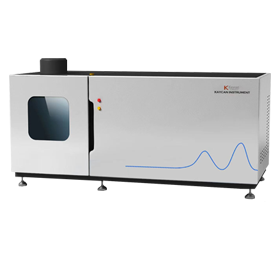
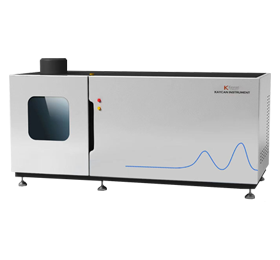
KN-5185 ICP for used Lube Oils

22 elements in used lubricating oils and in base oils, and it provides rapid screening of used oils for indications of wear. Test times approximate a few minutes per test specimen, and detectability for most elements is in the low mg/kg range. In addition, this test method covers a wide variety of metals in virgin and re-refined base oils. Twenty-two elements can be determined rapidly, with test times approximating several minutes per test specimen.
Read more >

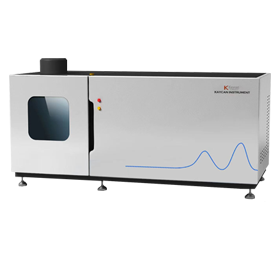
KN-4951 ICP for Unused Lube Oils

Additive packages are blends of individual additives, which can act as detergents, antioxidants, antiwear agents, and so forth. Many additives contain one or more elements covered by this test method. Additive package specifications are based, in part, on elemental composition. Lubricating oils are typically blends of additive packages, and their specifications are also determined, in part, by elemental composition. This test method can be used to determine if additive packages and unused lubric
Read more >

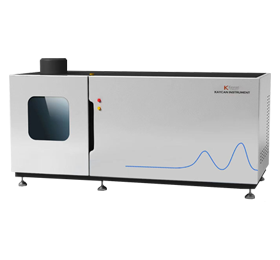
KN-7111 ICP for Middle Distillate Fuels

Trace elemental analysis is used to indicate the level of contamination of middle distillate fuels. Trace metals in turbine fuels can cause corrosion and deposition on turbine components at elevated temperatures. Some diesel fuels have specification limit requirements for trace metals to guard against engine deposits.
Read more >

KN-5708 ICP for Crude Oils and Residual Fuels

When fuels are combusted, vanadium present in the fuel can form corrosive compounds. The value of crude oils can be determined, in part, by the concentrations of nickel, vanadium, and iron. Nickel and vanadium, present at trace levels in petroleum fractions, can deactivate catalysts during processing. These test methods provide a means of determining the concentrations of nickel, vanadium, and iron.
Read more >

KN-14538 ICP for Biodiesel(B100)

Biodiesel, defined as a mixture of mono-alkyl esters, is produced from a wide range of vegetable oils and animal fats more commonly by a lipid transesterification process [1-3]. Biodiesel can be substituted for petroleum-based diesel fuel (petrodiesel) in virtually any standard unmodified diesel engine [4, 5]. Pure biodiesel or biodiesel blended with petroleum diesel can be used to fuel diesel vehicles, providing energy security and emissions and safety benefits
Read more >
Copyright:KAYCAN INSTRUMENT(DaLian) Co.,Ltd
   Record No:辽ICP备18001461号-2